Mushroom Business at Home – A Profitable Small Business Idea
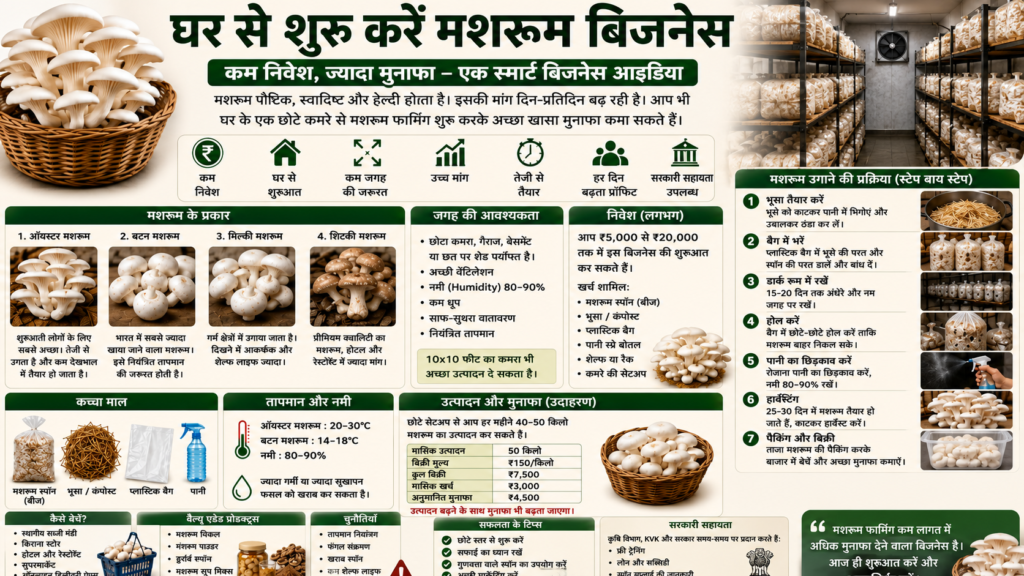
Mushroom Business at Home – A Profitable Small Business Idea
Starting a mushroom business at home is one of the best low-investment business ideas in today’s time. Mushrooms are highly nutritious, easy to grow, and have a huge demand in hotels, restaurants, supermarkets, and local markets. Many people are earning good profits by growing mushrooms from a small room or even from their rooftops. If you want to start a business with low investment and high profit, mushroom farming can be a great option.
Why Mushroom Farming is a Good Business
Mushrooms are rich in protein, vitamins, minerals, and antioxidants. Nowadays, people are becoming health conscious and including mushrooms in their diets. This increasing demand has made mushroom farming a profitable business.
Here are some reasons why mushroom farming is popular:
Low investment required
Can start from home
Needs very little space
High market demand
Fast growth cycle
Good profit margins
Government support and training available
Even students, housewives, and unemployed youth can start this business easily.
Types of Mushrooms for Business
There are different types of mushrooms grown in India. Some are easier for beginners while others require advanced knowledge.
1. Oyster Mushroom
Oyster mushroom is the best option for beginners. It grows quickly and requires less maintenance. It is widely used in cooking and has good market demand.
2. Button Mushroom
Button mushroom is the most commonly consumed mushroom in India. It needs controlled temperature and more care but gives good profits.
3. Milky Mushroom
Milky mushrooms are mostly grown in warm regions. They have a longer shelf life and attractive appearance.
4. Shiitake Mushroom
This is a premium mushroom used in hotels and restaurants. It sells at a higher price but requires special growing conditions.
For beginners, oyster mushroom farming is highly recommended because it is simple and affordable.
Space Required for Mushroom Farming
You do not need a large farm or land to start mushroom farming. A small room, garage, basement, or rooftop shed is enough.
The place should have:
Proper ventilation
Moderate humidity
Low sunlight exposure
Clean environment
Controlled temperature
A room of 10×10 feet can produce a good amount of mushrooms every month.
Investment Required
The investment depends on the size of your business. A small home setup can start with ₹5,000 to ₹20,000.
Basic Expenses Include:
Mushroom spawn (seeds)
Straw or compost
Plastic bags
Water spray bottle
Shelves or racks
Room setup
If you expand your business later, you can invest in cooling systems and advanced equipment.
Raw Materials Needed
1. Mushroom Spawn
Spawn is the seed material used to grow mushrooms. Good quality spawn is very important for successful production.
2. Straw or Compost
Dry wheat straw or paddy straw is commonly used for oyster mushrooms. Button mushrooms require compost.
3. Plastic Bags
Transparent plastic bags are used to store and grow mushroom beds.
4. Water
Mushrooms need moisture for proper growth. Clean water should be used regularly.
Step-by-Step Mushroom Farming Process
Step 1: Prepare the Straw
Take dry straw and cut it into small pieces. Soak it in water for several hours and then boil or steam it to kill bacteria and fungi.
Step 2: Dry the Straw
After boiling, remove excess water and allow the straw to cool.
Step 3: Fill Plastic Bags
Fill the plastic bags with layers of straw and mushroom spawn. Tie the bags properly.
Step 4: Store in Dark Room
Keep the bags in a dark and humid room for 15–20 days. White fungal growth will start appearing.
Step 5: Make Holes in Bags
Small holes are made in the bags so mushrooms can grow outside.
Step 6: Spray Water
Spray water daily to maintain humidity.
Step 7: Harvest Mushrooms
Within 25–30 days, mushrooms become ready for harvesting. Carefully cut them using clean hands or scissors.
Temperature and Humidity
Temperature is very important in mushroom farming.
Oyster mushrooms grow best at 20–30°C
Button mushrooms need 14–18°C
Humidity should remain around 80–90%
Too much heat or dryness can damage the crop.
Production and Profit
From a small setup, you can produce 40–50 kg mushrooms every month. The selling price usually ranges from ₹120 to ₹300 per kg depending on the type and market.
Example Profit Calculation
Item
Amount
Monthly Production
50 kg
Selling Price
₹150/kg
Total Sales
₹7,500
Monthly Expenses
₹3,000
Estimated Profit
₹4,500
As production increases, profits also grow. Many farmers earn ₹30,000–₹1 lakh monthly from mushroom farming.
How to Sell Mushrooms
Selling mushrooms is not very difficult because demand is increasing rapidly.
You Can Sell Through:
Local vegetable markets
Grocery stores
Hotels and restaurants
Supermarkets
Online delivery apps
Social media marketing
Fresh mushrooms sell quickly because they are healthy and tasty.
Packaging Tips
Good packaging increases customer trust and product value.
Use:
Clean plastic trays
Transparent wrapping
Proper labeling
Manufacturing and expiry dates
You can also create your own local brand.
Mushroom Value-Added Products
Instead of selling only fresh mushrooms, you can also make value-added products.
Examples:
Mushroom pickle
Mushroom powder
Dried mushrooms
Mushroom soup mix
Mushroom chips
These products have longer shelf life and better profits.
Government Support and Training
The Indian government supports mushroom farming through training programs and subsidies.
Agriculture departments and Krishi Vigyan Kendras provide:
Free training
Farming guidance
Low-interest loans
Spawn supply information
You can also learn mushroom farming from online videos and agricultural institutes.
Challenges in Mushroom Farming
Like every business, mushroom farming also has some challenges.
Common Problems:
Temperature control
Fungal contamination
Poor quality spawn
Short shelf life
Market competition
Proper cleanliness and good management can solve most problems.
Tips for Success in Mushroom Business
1. Start Small
Do not invest too much money in the beginning. Learn first and expand later.
2. Maintain Cleanliness
Mushrooms are sensitive to contamination. Always keep the growing area clean.
3. Use Quality Spawn
High-quality spawn gives better production and healthy mushrooms.
4. Learn Marketing
Good marketing helps increase profits. Use WhatsApp, Facebook, and Instagram for promotion.
5. Build Regular Customers
Restaurants and hotels can become regular buyers if your quality is good.
Future of Mushroom Farming
The future of mushroom farming is very bright. Due to increasing awareness about healthy food, mushroom demand is growing every year. Restaurants, cafes, and health-conscious consumers are buying more mushrooms than before.
Organic and chemical-free mushrooms are especially popular. Export opportunities are also increasing in international markets.
Conclusion
Mushroom farming at home is a smart and profitable business idea for beginners. It requires low investment, little space, and simple techniques. With proper care and marketing, anyone can earn a stable income from this business.
Whether you are a student, housewife, farmer, or unemployed youth, mushroom farming can become a successful source of income. Start with a small setup, gain experience, and slowly expand your production. Hard work, cleanliness, and consistency are the keys to success in the mushroom business.