Bajaj Chetak Crosses 7 Lakh Sales Mark, Emerges as One of India’s Fastest-Growing Electric Scooter Brands
Bajaj Chetak Crosses 7 Lakh Sales Mark, Emerges as One of India’s Fastest-Growing Electric Scooter Brands
India’s electric two-wheeler revolution is accelerating rapidly, and one name is now dominating conversations across the EV industry — Bajaj Auto. The company’s iconic electric scooter, the Bajaj Chetak, has officially crossed the remarkable milestone of 700,000 unit sales, signaling a massive transformation in India’s urban mobility landscape.
What makes this achievement even more impressive is the pace at which the brand has expanded its influence. In just two years, Bajaj Auto has more than doubled its market share in the electric two-wheeler segment, turning the Chetak from a nostalgic comeback product into one of the country’s most trusted and best-selling EV scooters.
The milestone reflects not only rising consumer confidence in electric mobility but also Bajaj’s strategic execution in manufacturing, dealership expansion, battery technology, and after-sales service. At a time when India’s EV market is becoming increasingly competitive with both startups and legacy automakers battling for dominance, the Chetak’s consistent growth highlights the importance of brand trust, reliability, and long-term ownership value.
From a Legendary Scooter to a Modern Electric Icon
For decades, the original Bajaj Chetak held legendary status in Indian households. Introduced in the 1970s, the petrol-powered Chetak became a symbol of middle-class aspiration and family transportation. The scooter earned a reputation for durability, affordability, and practicality, making it one of India’s most beloved two-wheelers.
When Bajaj Auto decided to revive the Chetak nameplate as an electric scooter, industry observers initially viewed the move as a nostalgic branding exercise. However, the company had a much larger vision. Instead of relying solely on emotional appeal, Bajaj focused on creating a premium electric scooter experience designed for modern urban commuters.
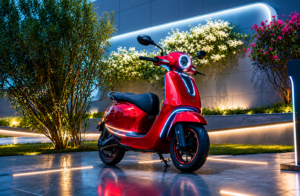
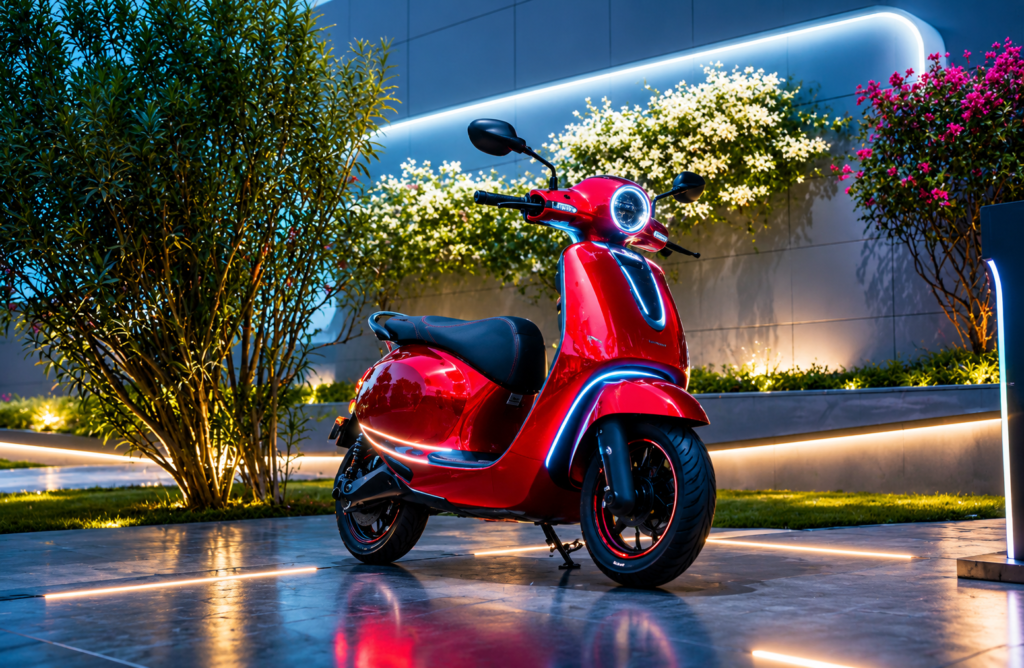
The result was a product that blended retro-inspired styling with advanced EV technology. The electric Chetak retained its classic silhouette while incorporating connected features, lithium-ion battery technology, regenerative braking, smart instrumentation, and smartphone integration.
This combination of heritage and innovation resonated strongly with Indian buyers.
Today, the Bajaj Chetak is no longer just a revival product. It has evolved into one of the pillars of India’s electric mobility movement.
Crossing 700,000 Sales: A Landmark Moment
Crossing the 7 lakh sales milestone represents a defining moment for Bajaj Auto’s EV ambitions. Reaching such a figure in the still-developing Indian electric scooter market demonstrates the growing mainstream acceptance of EVs.
Unlike the early years of electric mobility in India, where EVs were largely viewed as experimental or secondary vehicles, buyers are now increasingly choosing electric scooters as their primary mode of transportation.
The Chetak’s sales trajectory reflects this broader market evolution.
Industry experts note that several factors contributed to the scooter’s strong performance:
Rising petrol prices
Lower running costs of EVs
Improved charging infrastructure
Government incentives
Increasing environmental awareness
Better battery reliability
Expanding service networks
Bajaj successfully capitalized on all these trends while maintaining its reputation for dependable engineering.
The company’s nationwide reach also gave it a significant advantage over many EV startups that struggled to scale operations beyond metro cities.
Market Share Doubles in Two Years
One of the most striking aspects of Bajaj Chetak’s success story is its rapid market share growth.
Over the past two years, the company has substantially increased its presence in India’s electric two-wheeler sector. Industry estimates indicate that Bajaj has transformed from a relatively small player into one of the leading names in the segment.
The rise in market share reflects several strategic decisions taken by the automaker:
Aggressive Dealer Expansion
Bajaj significantly expanded its EV dealership network across India, including Tier-2 and Tier-3 cities. This broader availability helped the company attract customers outside major metropolitan areas.
Improved Product Portfolio
The company continuously updated the Chetak lineup with improved battery options, enhanced range, better performance, and new variants targeting different customer segments.
Premium Yet Reliable Positioning
Unlike some competitors that focused heavily on flashy marketing or aggressive pricing, Bajaj emphasized quality, reliability, and long-term durability.
This strategy appealed strongly to practical Indian consumers who value trust and low maintenance costs.
Strong Manufacturing Ecosystem
Bajaj’s established manufacturing infrastructure enabled consistent production scaling. This became especially important during periods when several EV companies faced supply chain disruptions and delivery delays.
India’s EV Boom Creates Massive Opportunities
The success of the Bajaj Chetak is closely linked to India’s rapidly expanding electric mobility ecosystem.
Over the past few years, India has witnessed a dramatic surge in electric vehicle adoption, particularly in the two-wheeler segment. Scooters and motorcycles remain the backbone of Indian transportation, making electrification in this category critically important.
Government policies such as the FAME incentive scheme, state-level subsidies, reduced registration fees, and tax benefits encouraged many buyers to shift toward electric vehicles.
At the same time, consumers became increasingly aware of the financial advantages of EV ownership.
Compared to petrol scooters, electric scooters offer:
Lower daily running costs
Reduced maintenance expenses
Smoother riding experience
Quiet operation
Eco-friendly commuting
For daily city commuters, these advantages translate into significant long-term savings.
Bajaj Auto recognized this opportunity early and positioned the Chetak as a dependable urban mobility solution.
Design Language That Connects Emotionally
A major reason behind the Chetak’s popularity is its design philosophy.
While many electric scooters in India adopted futuristic and aggressive styling, Bajaj chose a more timeless and elegant approach.
The Chetak’s smooth body panels, curved lines, metallic finish, and premium build quality create a sophisticated appearance that appeals to both young and older buyers.
The retro-modern styling successfully taps into nostalgia while remaining contemporary.
This emotional connection has played a crucial role in building customer loyalty.
Many buyers see the Chetak not just as a scooter, but as a continuation of a trusted family legacy.
Performance and Real-World Usability
Beyond design and branding, the scooter’s real-world practicality has been a major factor in its success.
Urban commuters prioritize reliability, comfort, battery range, and ease of use. Bajaj focused heavily on optimizing these aspects.
Key strengths include:
Smooth Urban Riding Experience
The scooter delivers refined acceleration and silent operation, making it ideal for city traffic conditions.
Reliable Battery Technology
Battery performance and durability remain critical concerns for EV buyers. Bajaj’s engineering approach helped build confidence among consumers.
Comfortable Ergonomics
The Chetak’s riding posture, suspension tuning, and seat comfort make it suitable for daily commuting.
Smart Features
Modern connected features such as navigation support, ride analytics, app connectivity, and digital instrumentation enhance the ownership experience.
Competition Intensifies in India’s Electric Scooter Market
India’s electric scooter segment has become one of the most competitive automotive categories in the country.
The market includes established manufacturers, emerging startups, and international brands.
Major players competing in the segment include:
Ola Electric
TVS Motor Company
Ather Energy
Hero MotoCorp
Honda Motorcycle and Scooter India
Despite intense competition, Bajaj has managed to steadily strengthen its position.
Analysts believe this is largely due to the company’s balanced approach that combines brand trust, manufacturing capability, and customer support.
Expanding Charging Infrastructure Boosts Confidence
Charging infrastructure remains one of the biggest factors influencing EV adoption.
Over the last two years, India has seen a noticeable expansion in charging networks across cities and highways.
Private companies, governments, shopping malls, residential societies, and workplaces have all contributed to building charging ecosystems.
For electric scooter users, home charging continues to be the primary solution. However, the growing availability of public chargers has significantly reduced range anxiety.
This shift has positively impacted EV sales across brands, including the Bajaj Chetak.
Consumer Perception Toward EVs Has Changed Dramatically
When electric scooters first entered the Indian market, many buyers had concerns regarding:
Battery lifespan
Fire safety
Maintenance support
Resale value
Charging convenience
Product reliability
However, consumer perception has evolved rapidly.
As established brands like Bajaj entered the segment, trust levels improved considerably.
Customers became more confident in EV technology, especially when backed by recognized manufacturers with nationwide service support.
The Chetak benefited greatly from this trust factor.
Manufacturing Scale Gives Bajaj an Advantage
One of Bajaj Auto’s biggest strengths lies in its manufacturing capability.
Unlike many startup EV companies that faced production bottlenecks, Bajaj leveraged its extensive industrial expertise to maintain supply consistency.
The company invested heavily in EV-focused production facilities and localization strategies.
Localization is especially important because reducing dependence on imported components helps companies:
Improve profitability
Reduce supply chain risks
Lower vehicle prices
Increase production speed
Bajaj’s manufacturing efficiency allowed it to scale rapidly while maintaining quality standards.
Strong Demand Beyond Metro Cities
Initially, electric scooters were mostly popular in metro cities such as Bengaluru, Delhi, Mumbai, Pune, and Hyderabad.
However, the market has expanded significantly into smaller cities and semi-urban regions.
Bajaj played a key role in this expansion by leveraging its widespread dealership network.
Customers in Tier-2 and Tier-3 cities increasingly prefer EVs due to rising fuel costs and improving awareness.
This geographic diversification contributed heavily to the Chetak’s 700,000 sales milestone.
Financial Benefits Drive EV Adoption
One of the strongest reasons behind the electric scooter boom is economics.
For daily commuters, EVs can deliver substantial savings over petrol-powered alternatives.
Electric scooters generally cost much less per kilometer to operate compared to conventional vehicles.
Additionally, EVs have fewer moving parts, resulting in lower maintenance requirements.
These advantages become especially important for:
Office commuters
Delivery riders
Students
Small business owners
Urban families
The Bajaj Chetak positioned itself as a premium yet economical long-term mobility solution.
Technology and Connectivity Becoming Key Differentiators
Modern buyers increasingly expect smart features in their vehicles.
Connected technology has therefore become an important differentiator in the EV market.
Features commonly valued by users include:
Mobile app integration
Navigation support
Ride statistics
Battery monitoring
Remote alerts
Geo-fencing
OTA updates
Bajaj steadily enhanced the Chetak’s technology package to remain competitive in this evolving landscape.
Environmental Impact and Sustainability
India’s transition toward electric mobility is also driven by environmental concerns.
Urban pollution levels and fuel dependency remain major national challenges.
Electric scooters offer the potential to reduce emissions, especially in densely populated cities.
While EVs are not a complete solution to environmental issues, widespread adoption can significantly reduce tailpipe pollution.
The success of the Bajaj Chetak reflects a larger societal shift toward cleaner transportation solutions.
Future Growth Potential Remains Massive
Despite rapid expansion, India’s EV market is still in an early growth phase.
Industry experts believe electric two-wheelers could eventually dominate urban mobility in India.
Several trends support this outlook:
Declining battery costs
Better charging infrastructure
Improved battery energy density
Stronger government support
Rising fuel prices
Increasing consumer awareness
For Bajaj Auto, this creates enormous long-term opportunities.
The company is expected to continue investing aggressively in EV technology, battery innovation, software integration, and new product development.
What the 700,000 Milestone Really Means
Crossing 7 lakh sales is not just about numbers.
It symbolizes the arrival of electric scooters into India’s mainstream automotive ecosystem.
The Bajaj Chetak’s growth story demonstrates that EVs are no longer niche products aimed only at technology enthusiasts.
They are becoming practical, trusted, and financially viable transportation solutions for millions of Indians.
For Bajaj Auto, the milestone also reinforces the company’s ability to adapt to changing market dynamics while preserving its legacy brand strength.
Industry Experts Expect Strong Momentum Ahead
Automotive analysts believe the Chetak could continue gaining momentum if Bajaj maintains:
Competitive pricing
Product innovation
Battery advancements
Service quality
Charging partnerships
Dealer expansion
The company’s established reputation gives it a strong foundation for future EV leadership.
As competition intensifies, consistent customer satisfaction will remain crucial.
Conclusion
The Bajaj Chetak’s journey from a nostalgic nameplate to a modern EV success story represents one of the most significant transformations in India’s automotive industry.
Crossing 700,000 sales and doubling market share within two years highlights the growing acceptance of electric mobility among Indian consumers.
More importantly, it proves that legacy automakers can successfully reinvent themselves in the electric era when backed by strong execution, reliable technology, and customer trust.
As India moves toward a cleaner and more electrified transportation future, the Bajaj Chetak is likely to remain one of the defining products shaping the country’s EV revolution.